
Postpartum doula support for LGBTQ+ families is non-medical, affirming care that supports recovery, newborn routines, feeding education, rest, and emotional adjustment without assumptions about gender, family structure, or who gave birth. In the Bay Area, Nurturing Hands Doulas provides personalized matching, flexible day and overnight care, and backup coverage for the whole family.
Request a free consultation for affirming postpartum doula support for your LGBTQ+ family.
Research describes inclusive, personalized support as an important part of reducing stress and helping families feel acknowledged during the perinatal period. Nurturing Hands Doulas offers flexible day, overnight, and 24/7 postpartum care across the Bay Area, with a team model that provides continuity and backup coverage. Explore inclusive postpartum doula support as you consider what would make your transition home feel more supported.
That support begins with understanding what inclusive postpartum care looks like in practice.
What Inclusive Postpartum Doula Support Means
Inclusive postpartum doula care recognizes the whole family, including gestational and non-gestational parents, partners, adoptive families, and families formed through surrogacy. A doula offers practical, emotional, and informational support without diagnosing or replacing licensed healthcare providers, while following the names, pronouns, boundaries, and choices each family identifies.
Postpartum care should make space for the whole family, not only the person who gave birth. That may include a gestational parent recovering physically, a non-gestational parent learning newborn routines, partners sharing feeding and overnight responsibilities, or family members adjusting after surrogacy or adoption. Inclusive care recognizes these roles with equal respect and asks families how they describe themselves, their relationships, and their baby.

Support that respects your family and your choices
A postpartum doula is a non-medical support professional, not a midwife, doctor, therapist, or other clinical provider. Doulas do not diagnose, prescribe, or perform clinical procedures. They may offer practical newborn care, feeding education, soothing support, recovery-focused help, and evidence-based information so parents can prepare questions for their licensed healthcare team. Research describes doulas as providers of continuous physical, emotional, and informational support before, during, and after childbirth and as advocates who can help bridge gaps in perinatal care through affirming, personalized support.
For LGBTQ+ families, that affirmation can be especially meaningful. Research notes that culturally safe care includes validating all family configurations, while doula support has been associated with improved maternal and birth outcomes. These findings do not promise a particular result for any individual family. They do show why respectful continuity and practical support may contribute to confidence, comfort, and a smoother transition into life with a newborn. Read the research on affirming doula support and potential outcomes associated with doula care.
Nurturing Hands Doulas can arrange postpartum support during daytime shifts with a 4-hour minimum, overnight shifts with an 8-hour minimum, or a 24/7 plan arranged around an agreed schedule and current team availability. Families may schedule postpartum support from one to seven nights per week, depending on availability and needs. Families considering overnight postpartum care can review the service details, and a consultation can clarify fit, coverage, and scheduling.
If you would like to talk through your family’s needs, request a free consultation with Nurturing Hands Doulas.
How LGBTQ+ Families Navigate the Postpartum Period
Postpartum adjustment can include physical recovery, sleep disruption, new routines, and the emotional work of becoming a family. LGBTQ+ parents may also encounter assumptions in care settings, so an affirming doula can help create respectful home support for every parent while encouraging families to consult their licensed healthcare team about clinical concerns.
Research describes heteronormative assumptions and gaps in traditional maternal and child health settings where language and routines may presume a mother-and-father family or overlook the experience of a non-gestational parent. These patterns can make ordinary appointments and care decisions feel unnecessarily stressful. Inclusive perinatal care is a foundational factor in the well-being of LGBTQ+ parents and their children, and addressing each family’s social, cultural, and clinical needs is essential to positive health experiences.
Affirming providers do more than use inclusive language. They ask how each parent wants to be addressed, understand the family’s chosen roles, avoid assumptions about feeding or attachment, and make space for questions without judgment. Knowledgeable care may reduce the stress associated with accessing health services. A postpartum doula is a non-medical support professional, not a replacement for a licensed healthcare provider, but can offer continuity, information, and practical help as parents navigate recovery and newborn care.
Supporting every parent’s recovery and adjustment
The gestational parent may be healing from birth, managing discomfort, adjusting to hormonal and sleep changes, or recovering from a surgical procedure. A non-gestational parent may also be adapting to interrupted sleep, new responsibilities, feeding support, and the emotional transition into parenthood. Both parents deserve attention, rest, reassurance, and clear information. Comprehensive physical and emotional postpartum support is considered critical to healthy parental adjustment, including for families navigating unique stressors within the LGBTQ+ community.
In the home, doula support can include newborn soothing, diapering, feeding assistance based on the family’s goals, and realistic sleep routines. Families who want uninterrupted rest can explore overnight doula newborn sleep support to see how nighttime care works. It may also create protected time for one parent to recover while the other rests or connects with the baby. These services are not guarantees of a particular health outcome, but supportive continuity is associated with greater confidence and may ease the transition into family life. A practical fourth trimester postpartum recovery plan can help the whole household identify needs before exhaustion compounds them.
Want support that respects your family structure and includes each parent? A consultation with an affirming postpartum doula team can help you explore the right fit.
Finding a Postpartum Doula Agency That Understands LGBTQ+ Families
Choosing an LGBTQ+-affirming postpartum doula agency means looking for more than welcoming language. Ask about inclusive intake, pronoun and role preferences, relevant training, personalized matching, clear screening, and backup coverage. The right agency should explain how its team supports each family structure while keeping doula care within a non-medical scope.
Affirming care should be clear before you schedule a consultation. LGBTQ+ parents commonly prioritize providers who explicitly acknowledge and respect their families, rather than expecting parents to explain why standard assumptions do not fit. Research identifies visibility and explicit inclusivity as important when LGBTQ+ parents choose care providers, while affirmative care may reduce stress during interactions with health services. Read the research on LGBTQ+ families and inclusive perinatal care.
Questions to ask before choosing your agency
- How does your team define inclusive care? Look for language that welcomes LGBTQ+ parents, trans and nonbinary parents, non-gestational parents, adoptive families, and families formed through surrogacy. Inclusive care should validate the family configuration rather than treat it as an exception.
- What training do your doulas have? Many LGBTQ+ parents value doulas with specific education in queer-affirming support. Ask whether that training is ongoing and how it informs communication, newborn care, feeding support, and household routines. The doula remains a non-medical professional who offers practical, emotional, and informational support, not diagnosis or clinical treatment.
- How will we be matched? A thoughtful agency should learn about your values, pronouns, family structure, recovery goals, and preferred communication style before recommending a doula. Families value matching that reflects their personal and cultural context, and trust grows when the relationship feels respectful from the first conversation. Learn more about what a postpartum doula does.
- What happens if our doula is unavailable? Ask how the agency provides backup coverage and how continuity works for your requested postpartum dates and shifts, not merely whether it offers a referral list. A primary-plus-backup team model can give families a clear plan during an intense, sometimes unpredictable transition, while postpartum shift availability should be confirmed for the dates you need.
Also confirm practical trust signals, including professional certifications, current CPR certification, and clear background-check procedures. Nurturing Hands Doulas uses these safeguards alongside personalized matching and team-based coverage. The goal is not to find a perfect label, but a prepared, accountable professional who recognizes your family and supports your choices. If you would like help evaluating your options, connect with Nurturing Hands Doulas for a consultation and discuss the kind of postpartum support your family needs.
Surrogacy, Adoption, and Non-Gestational Parent Support
Families formed through surrogacy or adoption, and families with non-gestational parents, can benefit from postpartum care designed around their actual roles and routines. A doula can teach newborn care, support bonding and feeding goals, and help parents share overnight responsibilities without assuming that one parent is the default caregiver or that every family follows the same path.
There is no single way to become a parent or to divide caregiving after a baby arrives. A supportive doula begins by asking how each parent wants to be addressed, what role they hope to play, and what kind of help would make the early weeks feel more manageable. That approach matters because inclusive care includes equal validation of all family configurations, a principle identified as central to culturally safe care for LGBTQ+ families (research on LGBTQ+ family-centered care).
Support for non-gestational parents
Non-gestational parents may be learning newborn care while also adjusting to a new identity, changing responsibilities, or complicated feelings about how others recognize their role. A postpartum doula can offer hands-on teaching without assuming that one parent is the default expert. This may include diapering, soothing, bathing, safe sleep preparation, recognizing feeding cues, and practicing ways to settle the baby.
Support can also help parents build confidence through repetition. The doula might invite each parent to take a turn with burping, paced bottle-feeding. Skin-to-skin contact or calming a fussy newborn, according to the family’s preferences and any guidance from their licensed healthcare providers. Doulas are non-medical professionals, so they do not diagnose, prescribe, or replace pediatric or postpartum care. Their role is to provide evidence-based information and practical support in the home, which can ease the transition to parenthood (postpartum doula research).
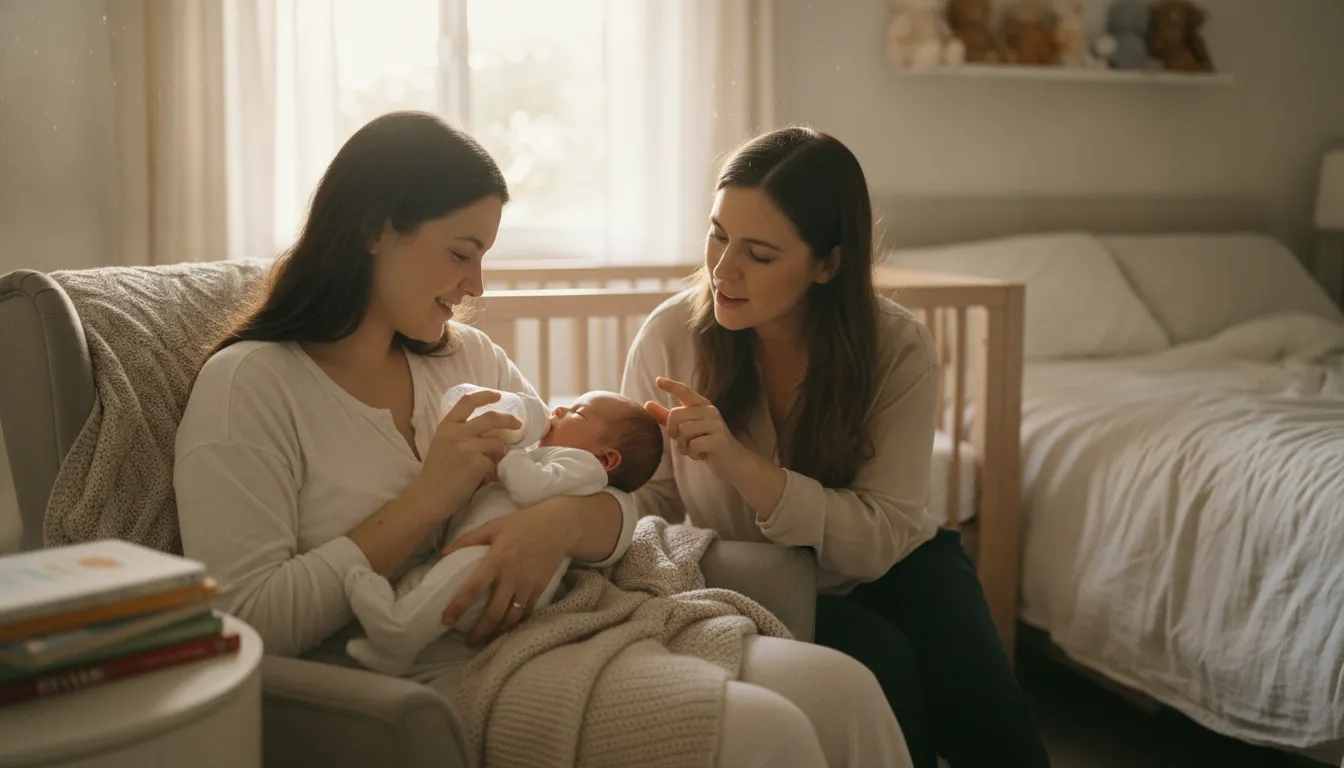
Welcoming a baby after surrogacy or adoption
When a baby joins the family through surrogacy or adoption, the doula can help establish a calm rhythm that works for everyone. Together, the family can create realistic feeding and sleep routines, organize nighttime responsibilities, and identify ways each parent can build connection. Postpartum doulas support the whole family unit. Not only the person who gave birth and can help families navigate the demanding first weeks of newborn care while reducing avoidable stress (family-wide postpartum support evidence).
Families can begin planning before the baby arrives by reviewing preparing for postpartum, including coverage needs, feeding preferences, overnight help, and the language they want caregivers to use. Learn more about tailored postpartum support during a free consultation with an affirming doula team.
How Nurturing Hands Doulas Serves All Family Structures
Nurturing Hands Doulas supports LGBTQ+ families throughout the San Francisco Bay Area with personalized matching, flexible postpartum scheduling, and a primary-plus-backup team model. Families can discuss daytime, overnight, or 24/7 care arranged around an agreed schedule and current team availability, newborn support, recovery needs, and communication preferences during a consultation, while licensed clinicians remain responsible for medical care.
Families deserve care that recognizes the people actually becoming parents, not just the person who gave birth. A postpartum doula may support recovery, newborn care, feeding goals, rest, household adjustment, and the emotional changes that can accompany a new family structure. Doulas provide non-medical support and do not diagnose, prescribe, or replace a licensed healthcare provider. They can also help families prepare questions for their clinical care team and create routines that feel practical and affirming.
A professional team with continuity and flexibility
Nurturing Hands Doulas is a professional Bay Area agency founded by Carla Rocha, who brings more than 15 years of experience and specialized certifications. Personalized matching helps connect families with a doula whose skills and communication style fit their preferences. A primary-plus-backup team model helps families plan for continuity when postpartum support matters most.
Care can be arranged around a family’s actual schedule, including daytime shifts, overnight care, and a 24/7 plan arranged around an agreed schedule and current team availability. Team members hold certifications and training related to newborn care, lactation education, and gentle pediatric sleep consulting. Doulas can offer evidence-based information and hands-on help while respecting each family’s feeding choices, cultural practices, pronouns, boundaries, and parenting decisions. Every doula is certified and CPR-certified, and the agency conducts background checks as part of its professional standards.
| Type of support | Best for | What care can include |
|---|---|---|
| Daytime postpartum care | Hands-on help while parents rest, feed, and learn newborn routines. | Newborn soothing, feeding education, recovery check-ins, and light household support. |
| Overnight care | Reliable sleep and a calm, covered night shift. | Newborn settling, feeding assistance, safe sleep practice, and morning handoff notes. |
| 24/7 postpartum care | Intense transitions, including surrogacy, adoption, or high-support needs. | Coverage arranged across day and night according to an agreed schedule and current team availability, with routine building and parent education. |
Families exploring agency-matched postpartum doula support can discuss the kind of care that would feel most useful, whether that means overnight newborn help, recovery support for a gestational parent, or practical assistance as partners learn new responsibilities together.
Payment questions can be part of the consultation, too. Nurturing Hands Doulas accepts HSA/FSA payments and can discuss using Carrot Fertility benefits when relevant. Eligibility, reimbursement, and coverage depend on the family’s plan and should be confirmed with the benefits provider.
To explore a supportive match for your family, schedule a free consultation with Nurturing Hands Doulas and share what postpartum care would help you feel more prepared and supported.
Request a consultation to discuss affirming postpartum doula support for your LGBTQ+ family.
Frequently Asked Questions
These questions cover what LGBTQ+-affirming postpartum doula care may include, how a doula can support gestational and non-gestational parents, and what to ask an agency. The answers describe non-medical support and practical planning, not diagnosis or treatment, so families can make informed choices alongside their licensed care team.
What is a queer or LGBTQ+-affirming postpartum doula?
An LGBTQ+-affirming postpartum doula offers non-medical emotional, physical, and informational support without assuming a family has a particular structure, gender identity, feeding plan, or parenting philosophy. Care may include newborn support, rest, recovery assistance, and practical guidance for the whole family.
Can a postpartum doula support both gestational and non-gestational parents?
Yes. Support can be tailored to each parent’s recovery, adjustment, role, and goals, including families formed through surrogacy or adoption. A thoughtful doula asks how each parent wants to be addressed and included, then adapts care around the family’s routines and priorities.
What does postpartum doula care include for LGBTQ+ families?
Depending on the family’s needs, care may be provided during daytime shifts with a 4-hour minimum, overnight shifts with an 8-hour minimum, or through a 24/7 plan arranged around an agreed schedule and current team availability. Families may schedule postpartum support from one to seven nights per week, depending on availability. A doula can offer hands-on newborn care, evidence-based information, feeding support, and help creating manageable routines while parents rest and recover. Nurturing Hands team members also hold certifications in lactation education, newborn care, and gentle sleep consulting.
How can I choose an affirming postpartum doula agency?
Ask how the agency supports LGBTQ+ families, surrogacy, adoption, and non-gestational parents; how matching works; and what backup coverage is available. Look for explicit inclusive practices, relevant experience, professional screening, and a non-judgmental approach. Personalized matching can help families find care that aligns with their values and circumstances.
Does a postpartum doula replace a midwife, doctor, or therapist?
No. A postpartum doula is a non-medical support professional and does not diagnose, prescribe, or perform clinical procedures. Your licensed healthcare providers remain responsible for medical care, while the doula offers practical, emotional and physical support and can encourage you to contact your care team when concerns arise.
Schedule a Free Discovery Call
Every family deserves postpartum support that respects who they are, how they became a family, and what they need after birth. A conversation can help you explore whether an inclusive, personalized care plan feels right for your household. Schedule a free discovery call with Nurturing Hands Doulas to discuss postpartum support for your family.