Doula support near Stanford and UCSF can give expecting parents steady, non-medical physical, emotional, and informational support while licensed clinicians manage complex or high-risk care. The right doula does not replace the obstetric or neonatal team. Instead, they help families prepare, communicate their preferences, care for the partner, and plan thoughtfully for the transition home.
Request a Consultation for Bay Area Doula Support
Families preparing for care at Stanford Health Care, UCSF Health, or another Bay Area hospital often have practical questions alongside medical ones: Who will help us stay grounded? How can my partner participate? What happens after discharge, especially if the baby needs extra observation or a NICU stay? This guide explains where a doula fits, what to ask, and how birth support can connect to postpartum and newborn care.
What to know about high-risk births at Stanford and UCSF
A high-risk pregnancy means that a medical condition, pregnancy complication, previous pregnancy history, fetal concern, or multiples may require closer monitoring or specialized care. Stanford Health Care and UCSF Health describe maternal-fetal medicine, neonatal, and diagnostic services for families who need a higher level of clinical support. Your care team remains the authority on your individual plan.
High-risk does not describe one single birth experience. It may refer to conditions that existed before pregnancy, a new condition such as preeclampsia or diabetes in pregnancy, a history of complications, preterm labor, multiples, or a concern involving the developing baby. The clinical plan may include additional appointments, imaging, consultations, monitoring, an induction, a cesarean birth, or preparation for specialized newborn care.
UCSF Health’s high-risk pregnancy overview explains that perinatologists, also called maternal-fetal medicine specialists, coordinate specialized care from consultation and testing through delivery and follow-up. Stanford Health Care’s maternity information describes advanced care for high-risk pregnancies and a Level II NICU at its Tri-Valley birth center. Hospital capabilities, visitor rules, doula policies, and the right place for delivery can differ, so confirm details with your own providers and facility.
A doula can be useful before and during this process without interpreting test results or making clinical recommendations. They can help you write down questions, prepare for a conversation with your care team, and identify the emotional and practical support your family may need. Learn more about the broader range of Bay Area doula services when you are comparing support options.
How can a doula support you at a high-risk birth center?
At a high-risk birth center, a doula can provide continuous presence, comfort measures, partner support, and help organizing questions while the medical team handles assessment and treatment. Their role is collaborative and non-clinical: they reinforce your preferences, help you stay oriented to the conversation, and encourage you to seek clarification from your licensed providers.
Complex care can involve more people, more information, and more changes to the plan than families expected. A doula may help by:
- Listening to your concerns and helping you prepare questions for the obstetric, maternal-fetal medicine, anesthesia, or neonatal team.
- Offering breathing support, position changes, light touch, and other comfort measures that are appropriate for the clinical setting and approved by the care team.
- Helping a partner understand how to participate, take breaks, eat, rest, and stay connected without becoming the only source of support.
- Reflecting back what the family heard so the parents can ask their clinicians to clarify unfamiliar terms or next steps.
- Supporting informed, choice-respecting communication without speaking over the birthing person or directing medical decisions.
- Providing a familiar emotional anchor if the room becomes busy, plans change, or separation from the baby becomes possible.
| Family need | What a doula may do | Who provides clinical care |
|---|---|---|
| Understanding the plan | Help you prepare questions and take notes about what you want clarified | Your obstetric, maternal-fetal medicine, anesthesia, and neonatal clinicians |
| Comfort during labor | Offer non-medical comfort measures within hospital policy | Nurses and clinicians determine what is medically appropriate |
| Partner support | Suggest practical ways to participate and take restorative breaks | The hospital team manages patient care and safety |
| After-birth transition | Help you plan questions and practical support for home | Your discharge team gives medical instructions and follow-up plans |
Doulas are not midwives, nurses, physicians, or neonatal specialists. Midwives are licensed medical practitioners who manage clinical care within their scope. Doulas provide non-medical emotional, physical, and informational support. They do not diagnose, prescribe, perform clinical procedures, monitor fetal or newborn vital signs, or replace a licensed healthcare provider.
Research can inform a conversation, but it cannot predict an individual outcome. One study of doula programs evaluated associations among specific populations and care settings, including people with pregnancy complications. Its findings should not be treated as a guarantee for any family. Read a peer-reviewed review of doula support and pregnancy-related complications, and discuss your personal risks and options with your medical team.
If you are preparing for a complex birth, a Bay Area birth doula can help you plan the non-medical layer of support around your clinical care.
What does an agency doula offer for complex births?
An agency can add continuity and coverage when a family is already coordinating specialists, appointments, and changing plans. Nurturing Hands Doulas uses personalized matching and a team model, so birth clients receive a primary doula and backup coverage. That structure can reduce the worry of relying on one person to be available at labor.
When you interview a doula agency for a high-risk or complex birth, ask specific questions rather than assuming every practice works the same way:
- How do you define your non-medical scope, and how do you communicate with a hospital care team?
- What experience do your doulas have supporting families whose plans may change quickly?
- Who is the backup doula, when will we meet them, and how is information shared between the team?
- How do you support a partner if the birthing person needs a procedure, additional monitoring, or a period of separation?
- What happens if labor begins before 37 weeks or outside the expected plan?
- How can birth support connect with postpartum, newborn, feeding, or overnight care after discharge?
Nurturing Hands Doulas provides birth support on call from 37 weeks until delivery. The team also offers postpartum day, overnight, and 24/7 support, newborn care, lactation education, childbirth education, and gentle pediatric sleep consulting. The service that fits your family depends on your care plan, timing, preferences, and availability. A consultation is the right place to discuss those details rather than relying on a generic package description.
Families comparing an agency model can learn about Nurturing Hands Doulas’ team, matching process, and professional standards before scheduling a conversation.
How do NICU stays connect to postpartum doula support?
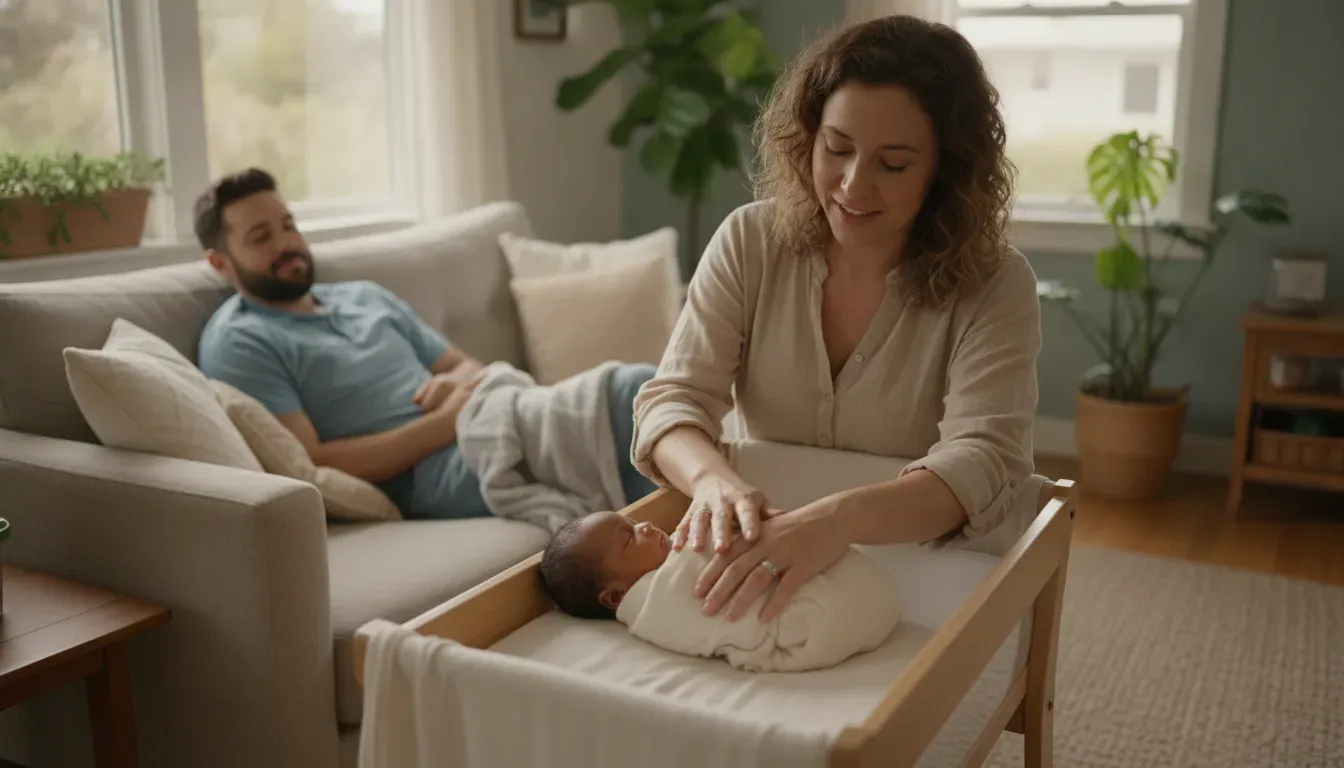
A NICU stay can change the rhythm of recovery, feeding, sleep, transportation, and the transition home. A postpartum doula does not provide NICU treatment or replace hospital staff. After discharge, they can support newborn care, parent rest, feeding education, routines, and practical recovery while the family follows the baby’s medical plan.
UCSF Health describes maternity and neonatal care that can include maternal-fetal medicine, complex obstetric care, neonatal services, and intensive care nursery planning. The page also emphasizes care beyond the NICU through follow-up resources. These details show why postpartum planning should include both medical follow-up and practical support at home.
Before discharge, ask the clinical team which instructions, appointments, feeding plans, medications, equipment, and warning signs your family must follow. A doula can help you organize questions and prepare the home routine, but the baby’s clinicians should be the source for medical guidance. Contact the care team promptly when you have a concern or are unsure whether a symptom is urgent.
Once your family is home, postpartum support may include:
- Newborn soothing, diapering, and age-appropriate care education.
- Breastfeeding, bottle-feeding, or lactation education within the doula’s non-clinical scope.
- Support for a parent recovering physically and emotionally after birth or a procedure.
- Practical help with meals, light household tasks, and creating a calmer rest routine.
- Partner and sibling support as the family adjusts to a new schedule.
- Help noticing questions to bring to the pediatrician, obstetric provider, or lactation clinician.
Nurturing Hands Doulas offers day shifts with a 4-hour minimum, overnight shifts with an 8-hour minimum, and postpartum support that can range from one to seven nights per week. Explore postpartum doula support or overnight newborn care in the Bay Area when you know what kind of help will make the transition home more manageable.
How do you book doula support near Stanford and UCSF?
Start by sharing your expected location, due date, clinical considerations, support goals, and likely postpartum needs during a consultation. A thoughtful agency should explain scope, availability, backup coverage, hospital policies, and the transition home. Booking earlier gives families more time to meet potential doulas and plan care without adding pressure to medical decisions.
Use this process to evaluate support:
- Confirm the clinical plan. Ask your obstetric or maternal-fetal medicine team where delivery is planned, what hospital policies apply to doulas, and whether any restrictions affect your support person or partner.
- Describe the full support window. Share whether you want labor support only, postpartum recovery help, overnight newborn care, or a combination that continues after discharge.
- Ask about matching and backup coverage. Learn who you will meet, how the agency handles availability, and what happens if the primary doula cannot attend.
- Discuss practical logistics. Ask about service minimums, travel across the Peninsula or San Francisco, scheduling, communication, and how the team works respectfully within hospital rules.
- Review payment possibilities. Nurturing Hands Doulas accepts HSA/FSA payments and Carrot Fertility benefits when applicable, but eligibility, reimbursement, and plan rules vary. Confirm details with your benefit administrator and the agency before counting on coverage.
For families in Palo Alto, Menlo Park, San Mateo, or nearby Peninsula communities, the Peninsula doula services guide offers a local starting point. Nurturing Hands Doulas serves families across the San Francisco Bay Area, including the Peninsula, South Bay, San Francisco, East Bay, North Bay, and Marin County.
If you are weighing your options, connect with the team to discuss support that respects your medical plan and extends into postpartum recovery.
Schedule a Call to Discuss Your Stanford or UCSF Support Plan
FAQs about doula support near Stanford and UCSF
Families planning complex births often want to know whether a doula can attend the hospital, what non-medical support includes, and how care continues after discharge. The answers depend on your providers, facility policies, and family needs, but these questions can help you have a clearer consultation with a Bay Area doula agency.
Can a doula support a high-risk pregnancy?
Yes, a doula may provide non-medical emotional, physical, and informational support during a high-risk pregnancy and birth, subject to the family’s care plan and hospital policies. Doulas do not diagnose, prescribe, interpret clinical data, or replace maternal-fetal medicine, obstetric, anesthesia, nursing, or neonatal care.
Will a doula be allowed at Stanford or UCSF?
Ask the specific hospital and your clinical team about current visitor and support-person rules. Policies can vary by facility, unit, procedure, and circumstances. A doula should respect those rules and work within the direction of the licensed care team.
Can a doula help if a cesarean birth becomes necessary?
A doula can continue offering emotional support, calm presence, partner support, and information organization when a birth plan changes. The surgical team manages the procedure and all clinical decisions. Ask in advance how the hospital handles doula access in the operating room and recovery area.
Can postpartum support help after a NICU stay?
It can help with the home transition, newborn care education, parent rest, feeding support within scope, light household tasks, and questions to bring to clinicians. Postpartum doulas do not provide NICU treatment or medical advice. Follow the baby’s discharge instructions and contact the care team about health concerns.
When should I book a doula for a complex birth?
Many families begin conversations in the second trimester so they have time to discuss needs, meet potential doulas, and understand backup coverage. Earlier planning may be especially helpful when a family expects specialized care or wants postpartum and overnight support after delivery. Availability is not guaranteed, so ask during your consultation.
Plan support that continues beyond delivery
Complex birth planning is not only about the day of delivery. Families may also need a calm, reliable bridge into recovery, newborn care, feeding, rest, and follow-up appointments. Choosing a doula who understands non-medical boundaries and offers a thoughtful agency support model can help you plan that full transition.
Contact Nurturing Hands Doulas to request a consultation about birth, postpartum, or overnight newborn support in the Bay Area.