
Perinatal mood disorder resources in the Bay Area include licensed mental health care, local screening and referral programs, peer support, crisis services, and practical postpartum help. A doula can offer non-medical support at home, but persistent or severe symptoms deserve prompt attention from a qualified healthcare or mental health professional.
Request a Consultation with Nurturing Hands Doulas
Pregnancy and the first year after birth can bring major physical, emotional, relationship, and practical changes. Feeling overwhelmed does not mean you are failing, and asking for support is not a sign that you should be able to cope less. It is a way to connect the right kind of care to what you are experiencing.
This guide focuses on a question many expecting and new parents ask: where can I find perinatal mental health resources in the Bay Area beyond doula support? It explains the difference between everyday support, clinical care, peer connection, and urgent help so you can make a plan without having to sort through every option alone.
What are perinatal mood and anxiety disorders?
Perinatal mood and anxiety disorders, often called PMADs, are mental health conditions that can arise during pregnancy or after birth. They may affect a birthing person, partner, or another new parent and can include depression, anxiety, obsessive-compulsive symptoms, post-traumatic stress, bipolar symptoms, or postpartum psychosis. These conditions are treatable and deserve professional support.
The term perinatal includes pregnancy and the postpartum period. Symptoms can look different from one person to another. A parent may feel persistently sad, hopeless, anxious, irritable, numb, frightened, disconnected, or unable to enjoy things that usually matter to them. Some people experience racing thoughts, panic, intrusive unwanted thoughts, trouble bonding, or persistent doubts about their ability to care for a baby.
The National Institute of Mental Health explains that perinatal depression can occur during pregnancy and after childbirth. It distinguishes short-lived “baby blues” from symptoms that are severe, last longer than two weeks, or make daily responsibilities difficult. That distinction is not a diagnosis. It is a reason to speak with a healthcare provider who can evaluate what is happening and discuss appropriate next steps.
- Depression signs: persistent sadness, hopelessness, guilt, loss of interest, low energy, or difficulty concentrating.
- Anxiety signs: excessive worry, fear, panic, restlessness, irritability, or physical tension.
- Other concerns: intrusive thoughts, trauma symptoms, difficulty bonding, or changes in sleep and appetite that feel different from ordinary newborn disruption.
- Partner and family concerns: partners and other caregivers can also need perinatal mental health support.
Read the National Institute of Mental Health overview of perinatal depression for a detailed explanation of symptoms and treatment. You do not need to identify the condition yourself before asking for help.
If you are looking for practical support while contacting a provider, Nurturing Hands Doulas explains the role and limits of postpartum doula support. A doula can listen, help with newborn care, and reduce practical strain, but does not diagnose, prescribe, or provide psychotherapy.
Where can Bay Area families find clinical perinatal mental health care?
Clinical perinatal mental health care may include assessment, therapy, medication management, care coordination, or a combination of services. Start with your prenatal or postpartum healthcare provider, primary care clinician, or a licensed mental health professional, then ask about perinatal expertise, current availability, language access, cost, and whether virtual appointments are offered.
A healthcare provider can help determine whether symptoms relate to depression, anxiety, trauma, sleep disruption, a medical condition, medication needs, or another concern. Depending on your situation, care may involve a therapist, psychologist, psychiatrist, licensed clinical social worker, primary care clinician, or an obstetric provider who coordinates a referral. Treatment decisions belong with qualified clinicians who understand your health history and preferences.
UCSF Perinatal Wellness and Mental Health
The UCSF Perinatal Wellness Program describes care coordination, brief therapy, consultation with perinatal psychiatrists, and pregnancy and postpartum support groups. Its page states that the program is open to patients of UCSF obstetrics clinics, so families receiving care elsewhere should confirm eligibility rather than assume the program is available to them.
Santa Clara County Perinatal Mental Health Collaborative
For South Bay families, the Santa Clara County Perinatal Mental Health Collaborative is a useful starting point for information about screening, referrals, treatment, and local organizations. The county page also lists crisis and maternal mental health contacts. Verify current hours, eligibility, and program availability directly with each organization.
Provider directories and referral help
Postpartum Support International’s provider directory can help families search for perinatal mental health professionals and groups. PSI also offers peer support, support navigators, online groups, and a HelpLine. A directory is a starting point, not a guarantee that a clinician accepts your insurance, has an opening, or is the right fit. Ask about all three before scheduling.
| What you need | Possible starting point | What to confirm |
|---|---|---|
| Evaluation or treatment | Prenatal, postpartum, primary care, therapist, or psychiatrist | Perinatal experience, appointment timing, cost, and treatment options |
| UCSF-based support | UCSF Perinatal Wellness and Mental Health | Whether you receive care through a UCSF obstetrics clinic |
| South Bay referrals | Santa Clara County Perinatal Mental Health Collaborative | Current local program eligibility and availability |
| Peer connection or a directory | Postpartum Support International | Group schedule, language, format, and provider availability |
| Immediate emotional support | National Maternal Mental Health Hotline | Use the hotline for support and referrals, not as a replacement for emergency services |
Learn more about Bay Area doula services from Nurturing Hands Doulas as one complementary part of a wider care plan. For clinical symptoms, keep a licensed provider at the center of the plan.
Which Bay Area peer and community resources can help?
Peer and community resources can reduce isolation, offer lived-experience connection, and help parents identify the next practical step. They may include support groups, peer navigators, parent groups, community nonprofits, grief support, and culturally or linguistically responsive services. Peer support is valuable, but it does not replace clinical evaluation when symptoms are persistent or severe.
Postpartum Support International provides online groups, peer mentors, support navigators, and a HelpLine that connects people with information and resources. Its materials emphasize that perinatal mental health conditions can affect partners and family members as well as the person who gave birth. That broader view matters because a partner may notice changes first or need support while helping someone else seek care.
Local organizations may be especially useful when practical barriers are contributing to distress. Families can ask about home visiting, parenting groups, grief support after pregnancy or infant loss, food and diaper resources, transportation, language access, and referrals to clinicians. The Stanford Medicine Children’s Health resource list includes perinatal, postpartum, NICU, pregnancy-loss, and infant-loss support options. Confirm that a listed program serves your geography and current needs.
When comparing a group or community program, ask:
- Is the group led by a licensed professional, trained facilitator, peer specialist, or community volunteer?
- Is it designed for pregnancy, postpartum adjustment, a specific diagnosis, grief, trauma, partners, or another need?
- Is the format virtual, in person, phone-based, or a mix?
- Is interpretation or language-specific support available?
- What should you do if your symptoms worsen between meetings?
Community support can sit alongside therapy, medication management, medical follow-up, and practical postpartum care. If you are arranging home help, a postpartum doula may support rest, newborn care, feeding education, routines, light household tasks, and communication with your care team, within a non-medical scope.
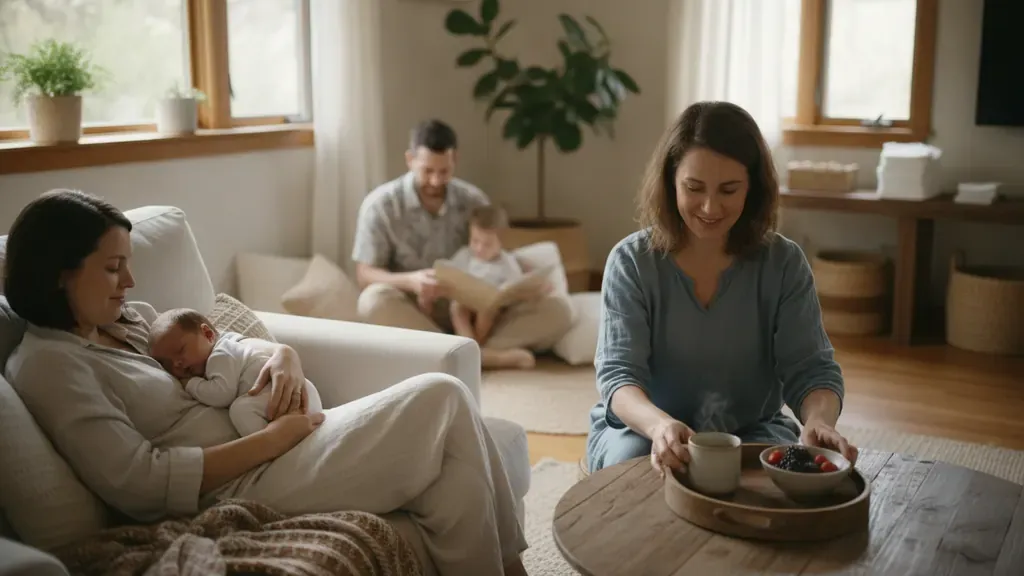
Families can also explore postpartum doula support in the Bay Area when practical strain or lack of rest is making the transition harder. A stronger support network may make it easier to attend appointments and follow a clinician’s care plan, but it should never delay urgent mental health care.
When should you seek urgent or emergency help?
Seek urgent professional help when emotional or behavioral changes feel severe, interfere with safety or daily functioning, or include thoughts of suicide, self-harm, harming someone else, or losing touch with reality. Call or text 988 for a suicidal or mental health crisis, call 911 for imminent danger, and use the National Maternal Mental Health Hotline for free, confidential support and referrals before, during, or after pregnancy.
The National Maternal Mental Health Hotline is available 24/7 by call, text, or chat at 1-833-TLC-MAMA (1-833-852-6262). The U.S. Health Resources and Services Administration says trained counselors can listen, provide information, and connect families with local or telehealth providers. The hotline is not a crisis line. If someone may harm themselves or another person, use 988 or emergency services instead.
Call or text 988 for suicidal thoughts or a mental health crisis. If there is immediate danger, a person cannot stay safe, or emergency medical help is needed, call 911 or go to the nearest emergency department. If you are concerned about someone else, you can also seek guidance on their behalf.
Postpartum psychosis is a medical emergency. Signs can include severe confusion, hallucinations, delusions, extreme agitation, or behavior that seems detached from reality. Do not leave the person alone with a baby if safety is in question. Contact emergency services and explain that the person is pregnant or postpartum. A doula, friend, or family member can help make the call, but should not attempt to manage an emergency independently.
Urgent help is appropriate even if you are unsure what the symptoms mean. You do not need to wait until a scheduled appointment, complete a self-assessment, or receive a diagnosis before contacting a qualified professional.
If you are building a non-urgent support plan, overnight postpartum doula care may help with practical newborn support and protected rest. It is not emergency mental health treatment.
How can a postpartum doula complement mental health care?
A postpartum doula complements mental health care by offering non-medical emotional, physical, informational, and practical support at home. Doulas with Nurturing Hands Doulas can help with newborn care, feeding education, rest, routines, and household tasks while a licensed provider handles assessment and treatment. The two roles are supportive but not interchangeable.
A doula may notice that a parent is struggling, listen without judgment, help organize questions for a healthcare visit, or encourage the family to contact a provider. With the family’s permission, a doula can also support practical routines that make it easier to eat, sleep, attend appointments, or accept help from a partner. These are supportive functions, not clinical treatment.
Nurturing Hands Doulas provides postpartum day, overnight, and 24/7 care options. Day shifts have a four-hour minimum, overnight shifts have an eight-hour minimum, and support may range from one to seven nights per week. Families can discuss their needs during a consultation and ask which service structure fits their household. Availability and fit should be confirmed directly with the agency.
What a doula can do
- Provide calm, non-judgmental companionship and practical support.
- Help with newborn soothing, feeding education, diapering, and household routines.
- Offer rest support and light household help within the agreed service scope.
- Help a parent prepare questions or remember to contact a healthcare provider.
- Respect the family’s clinical care plan and encourage appropriate follow-up.
What a doula cannot do
- Diagnose depression, anxiety, postpartum psychosis, or another condition.
- Prescribe, manage, or change medication.
- Provide psychotherapy, clinical screening, or emergency crisis intervention.
- Replace a licensed healthcare or mental health professional.
- Guarantee a mental health outcome.
Nurturing Hands Doulas is a professional agency with certified doulas, CPR-certified team members, background checks, personalized matching, and a team-based model. Those trust signals can matter when inviting someone into your home, but families should still choose clinical care based on their own symptoms and a qualified provider’s assessment.
If practical support would help you carry out a mental health care plan, review Nurturing Hands Doulas services and ask about a consultation. Keep the boundaries between doula support and clinical treatment clear from the beginning.
How can you build a Bay Area perinatal mental health support plan?
A practical support plan names the people to contact, the symptoms that should prompt a call, the help available at home, and the emergency steps to use if safety changes. Start before you need a crisis response when possible, include a partner or trusted person, and confirm each resource’s eligibility, availability, and scope.
- Choose a first clinical contact: Write down your prenatal or postpartum provider, primary care clinician, therapist, or another qualified mental health professional. Ask who to contact after hours.
- Save immediate support numbers: Keep the National Maternal Mental Health Hotline, 988, and local emergency information somewhere your household can find it quickly.
- Identify peer support: Search PSI groups, a local parent group, or a community organization that fits your language, identity, location, and concerns.
- Plan practical coverage: Decide who can bring food, hold the baby while you rest, drive you to an appointment, support older children, or stay with you when you feel overwhelmed.
- Set a check-in rhythm: Ask a trusted person to check in and listen for changes in mood, anxiety, sleep, functioning, or safety without judgment.
- Reassess after birth: A plan that worked during pregnancy may need to change after delivery, feeding changes, sleep disruption, a medical event, or a return to work.
Partners and family members can help by using specific, compassionate language: “I have noticed you seem overwhelmed and I am here to help you contact someone.” Avoid arguing about whether a person should feel grateful or telling them to simply sleep more. Practical help is important, but it should support access to appropriate care rather than replace it.
For a broader overview of postpartum resources in the region, see this Bay Area postpartum resource guide. This article’s narrower focus is perinatal mood support and resource navigation, so use both guides for their distinct purposes.
Connecting with a postpartum doula is another option for families who want non-medical help at home. Contact Nurturing Hands Doulas to discuss whether the agency’s Bay Area support model fits your family and how it could complement, but never replace, professional mental health care.
Schedule a Call with Nurturing Hands Doulas
Frequently Asked Questions About Bay Area Perinatal Mood Support
Bay Area families can combine clinical mental health care, peer support, crisis resources, and practical postpartum help. The safest choice depends on symptoms and urgency: use emergency services for immediate danger, qualified clinicians for assessment and treatment, peer programs for connection, and postpartum doulas for non-medical support at home.
What is the difference between a postpartum doula and a mental health professional?
A postpartum doula provides non-medical emotional, physical, informational, and practical support, such as newborn care, feeding education, routines, and household help. A licensed mental health professional evaluates and treats mental health conditions through services such as psychotherapy or medication management. Doulas and clinicians may complement one another, but they are not interchangeable.
Where can I find a perinatal therapist in the Bay Area?
Start with your prenatal or postpartum healthcare provider, primary care clinician, health system, or a qualified referral service. Postpartum Support International’s provider directory can help you identify perinatal mental health professionals and groups. Ask each provider about current openings, cost, language access, virtual care, and experience with your specific concern.
Is the National Maternal Mental Health Hotline an emergency service?
No. The National Maternal Mental Health Hotline offers free, confidential support and referrals 24/7 by call, text, or chat at 1-833-TLC-MAMA (1-833-852-6262). For suicidal crisis, call or text 988. For imminent danger or an emergency, call 911 or go to the nearest emergency department.
Can a partner call a perinatal mental health resource?
Yes. Partners and family members can contact the National Maternal Mental Health Hotline for support and information about a pregnant or postpartum person. They can also ask a healthcare provider or PSI support service how to help. If safety is immediately at risk, use 988 or emergency services rather than waiting for a routine referral.
How can a postpartum doula help when a parent is struggling emotionally?
A postpartum doula can provide non-medical companionship, newborn care, feeding education, rest support, practical household help, and encouragement to contact a qualified provider. A doula cannot diagnose, prescribe, provide psychotherapy, or respond to an emergency. Families should tell the doula and clinician what support is needed and keep clinical care central.
A compassionate next step
You do not have to choose between practical postpartum help and professional mental health care. If you are expecting or newly parenting in the Bay Area, Nurturing Hands Doulas can talk through your household support needs and explain how day, overnight, or 24/7 postpartum care may fit alongside your healthcare plan. Request more information when you are ready.
Resource details, program eligibility, hours, and availability can change. Confirm current information with the official organization or a qualified healthcare professional. This article is educational and does not diagnose, treat, or replace medical or mental health care.