
Preparing for a baby without a romantic partner does not mean preparing without support. You may have family, friends, or a trusted community around you. You may still want professional help with planning, recovery, newborn care, or the long stretches when you are the only adult awake. The right doula arrangement can fit your actual support network rather than assume what it should look like.
A doula for single parents bay area families can provide non-medical emotional, physical, and informational support through pregnancy, birth, and postpartum recovery. Nurturing Hands Doulas serves San Francisco, the East Bay, South Bay, North Bay, the Peninsula, and Marin County, with personalized matching, team expertise, and dependable backup coverage.
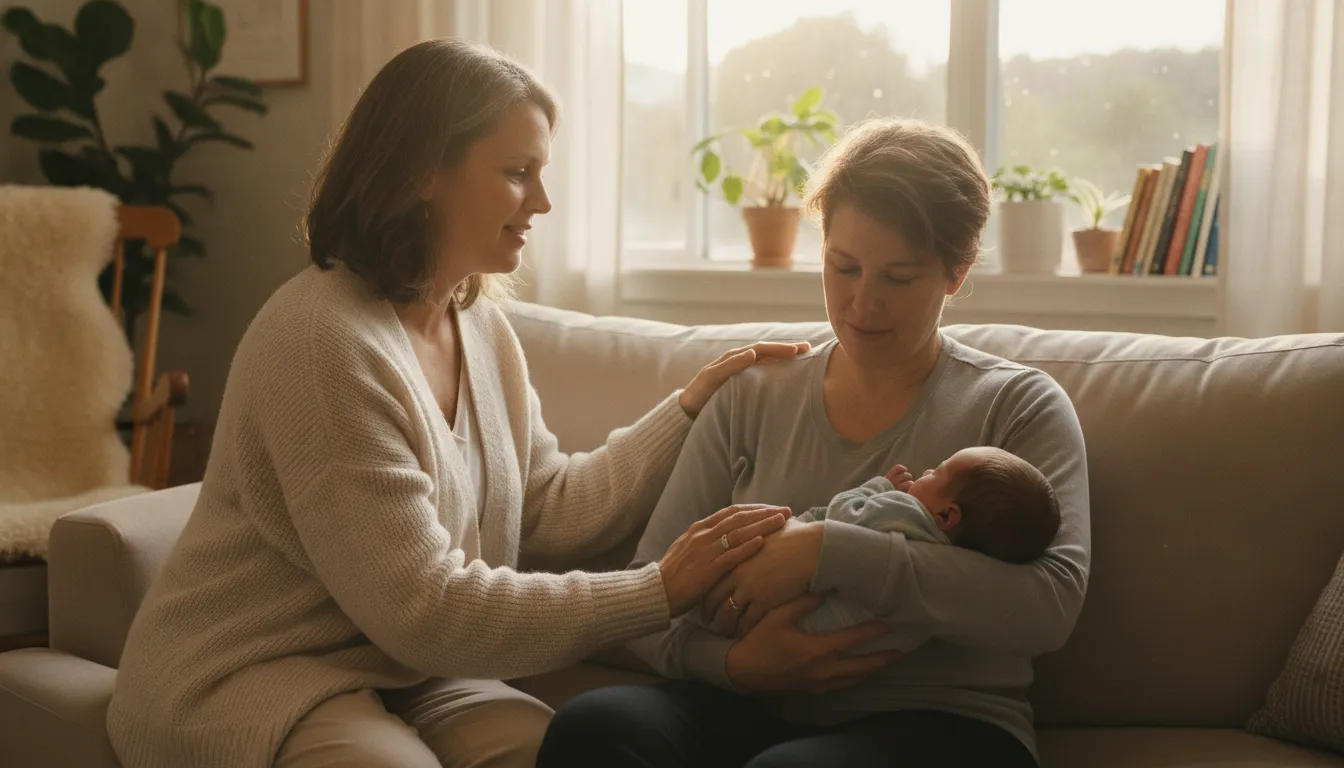
Support may be especially valuable when you are weighing how to protect your rest. Organizing newborn care, and making informed decisions while keeping your own preferences at the center. Here is how doula care can complement the people and healthcare professionals already supporting you.
Why Single Parents Can Benefit From Doula Support
Doula support can give a single parent another steady source of practical, emotional, and informational care during pregnancy, birth, and postpartum recovery. It does not assume that a parent is alone or without loved ones. Instead, it adds professional support that can complement family, friends, community, and the healthcare team when extra guidance or dependable presence would be useful.
Every family has a different support network. Some single parents have deeply involved relatives, close friends, or a co-parenting community. Others may have support that is caring but unavailable during work hours, overnight, or at short notice. A doula can help fill a specific gap without replacing the relationships that already matter. That might mean talking through questions, helping a parent prepare for a newborn’s arrival. Offering calm reassurance during a difficult day, or providing an additional set of hands during the transition home.
Research associates social support with protection against antenatal and postnatal depression, anxiety, and stress. It also associates support with greater confidence in infant care. Research on community doula support also describes benefits such as greater knowledge and skill. It may help parents build social ties and use maternity services more effectively. These findings do not guarantee a particular emotional or health outcome for any individual. They do show why consistent, respectful support may be valuable when a parent is making many decisions while also navigating physical recovery and newborn care.
Education and navigation are often just as important as encouragement. A doula may explain common options in plain language, help a parent prepare questions for a licensed healthcare provider, and support the parent in expressing preferences. Community doula models have included emotional support, peer education, navigation, and advocacy alongside standard maternity care. Advocacy here means helping a parent understand and communicate their choices, not making medical decisions or speaking over the parent.
Doulas provide non-medical emotional, physical, and informational support. They do not diagnose, prescribe, check blood pressure or fetal heart tones, perform vaginal exams, or replace a midwife, physician, nurse, or other licensed healthcare professional. Clear scope boundaries help a single parent know when to seek clinical care while still receiving compassionate support between appointments and during everyday challenges.
If you are considering a doula for single-parent support in the Bay Area. A consultation can help you identify the kind of presence, education, and practical help that fits your situation. You can discuss your existing support network, your priorities, and which services may complement your care plan.
What Does a Doula Do When There Is No Partner Present?
A doula can offer steady, non-medical emotional, physical, and informational support when a partner is not present during labor. That may include helping you prepare, offering comfort measures, explaining options, and staying with you throughout labor while your licensed healthcare team manages clinical care.
Choosing a doula does not mean you have to manage every decision or moment alone. Before labor, your doula can help you think through preferences, questions for your provider, comfort techniques, and the kind of communication that feels supportive to you. This planning can be especially useful when you want a clear plan for asking questions, communicating boundaries, or identifying the people you want involved.
Support during labor and birth
During labor, a doula may provide reassurance, breathing and relaxation reminders, position suggestions, massage, counterpressure, and other comfort measures. They can help you stay oriented as labor changes, remind you of options to discuss with your care team, and offer calm companionship during transitions. Doulas can support families at home, in a birthing center, or in a hospital, depending on the planned setting and the arrangement you make.
This role is continuous support, not clinical care. Doulas do not check blood pressure or fetal heart rate, perform vaginal exams, diagnose conditions, prescribe treatment, or make medical decisions for you. Your midwife, physician, nurses, and other licensed clinicians remain responsible for monitoring health and managing medical care. A doula can help you understand information and formulate questions, while respecting your choices and your healthcare team’s guidance.
Reliable coverage when timing is unpredictable
Birth support is on call from 37 weeks until delivery. Nurturing Hands birth clients receive a primary doula and a backup doula, and meet both during pregnancy. That primary-plus-backup arrangement gives you the opportunity to build familiarity with the people who may attend your birth rather than depending on one individual’s availability.
You can learn more about birth doula support and consider what would make you feel prepared, heard, and physically supported. If you are exploring a doula for single parents in the Bay Area, a consultation can help you discuss your birth setting. Desired support, existing community, and the level of continuity you want before choosing an arrangement.
Postpartum Doula Support for Single-Parent Households
| Option | Focus |
|---|---|
| Day | Recovery and newborn care |
| Overnight | Feeding, soothing, and rest |
| 24/7 | Continuous family support |
Postpartum support can give a single parent practical help during the demanding transition home with a newborn. It does not ask them to parent in a particular way. Day, overnight, and 24/7 options may be tailored around recovery, feeding, soothing, rest, household needs, and the kind of hands-on guidance that feels useful.
The right arrangement does not have to mean having someone in the home constantly. Some parents need help during the day while they shower, eat, recover, or attend to an older child. Others may value overnight coverage so they can sleep while a doula provides newborn care and feeding support. Nurturing Hands offers postpartum care during the day, overnight, or continuously through 24/7 care. Day shifts have a four-hour minimum, while overnight shifts have an eight-hour minimum and can be scheduled from one to seven nights per week.
Practical newborn care and feeding guidance
A postpartum doula can help with the everyday work that fills the first weeks. This may include holding and soothing the baby, settling into feeding routines, and offering calm, non-medical information as questions arise. Support may include newborn care, soothing techniques, lactation education, infant feeding guidance, sleep coaching, and household management. This might look like demonstrating a soothing approach, helping prepare for a feeding, washing bottles, or keeping the kitchen manageable while the parent rests.
Lactation education and feeding guidance are informational supports, not a substitute for medical evaluation. A doula does not diagnose, prescribe, or perform clinical procedures. If a parent has concerns about feeding, recovery, the baby’s health, or their own physical or emotional wellbeing. The doula can encourage communication with the appropriate licensed healthcare professional while continuing to offer practical support.
Recovery support that respects individual choices
Recovery can be easier to overlook when one adult is coordinating newborn care, meals, errands, and household tasks. A doula may help create space for hydration, nourishment, rest, and basic recovery routines. They can also help a parent think through what would make the next shift more manageable. Whether that means preparing supplies, organizing a feeding station, or making a realistic plan for the night.
For a fuller look at the early weeks, read this guide to fourth-trimester postpartum recovery. When consistent hands-on help would be useful, explore Bay Area postpartum doula support and discuss which schedule fits your household. A free consultation can help you describe your routines, priorities, and support needs so the agency can outline appropriate options.
How Overnight Doula Care Can Support Solo-Parent Rest
Overnight doula care can give a solo parent practical help during the long, demanding hours when newborn needs and postpartum recovery overlap. A doula may care for the baby, support feeding, offer soothing strategies. And help protect time for rest while the parent remains in charge of decisions and continues working with their healthcare team.
Nighttime support does not have to look the same for every family. Some parents want help with newborn care between feeds. Others need guidance as they learn their baby’s cues, reassurance during a difficult stretch, or assistance keeping basic household tasks manageable. A postpartum doula can adapt the focus of a shift to the parent’s priorities rather than assuming that every family needs the same routine.
Practical newborn care through the night
Overnight support may include diapering, burping, settling, and soothing the baby. A parent may then return to bed after a feeding or take a longer uninterrupted rest period when appropriate. Feeding support can include bringing the baby to the parent, helping organize supplies, and offering non-medical infant feeding guidance. Nurturing Hands also lists lactation education, feeding guidance, sleep coaching, and household management among its postpartum services. These forms of support can make nighttime care feel more organized without promising that a baby will sleep through the night.
A doula may also notice patterns worth discussing with the parent, such as persistent feeding difficulty or concerns about recovery. Doulas provide non-medical support and do not diagnose, prescribe, or perform clinical procedures. Questions about a parent’s health or the baby’s wellbeing should go to the appropriate licensed healthcare provider.
Flexible scheduling for changing recovery needs
Nurturing Hands overnight postpartum shifts have an 8-hour minimum and can be scheduled from one night to seven nights per week. That range allows a family to consider the level of help that fits its circumstances. Whether the priority is occasional relief, a consistent weekly rhythm, or more frequent support during an especially demanding phase. Overnight help can include newborn care, feeding support, rest, and postpartum recovery assistance.
For families exploring a doula for single parents bay area, dependable coverage and a clear plan matter as much as the overnight tasks themselves. You can learn more about Bay Area overnight doula care, then discuss your expected due date, feeding preferences, recovery goals, and preferred schedule with the team. A consultation can help you identify an overnight arrangement that respects your choices and supports your transition into parenthood.
How to Find and Book a Bay Area Doula as a Single Parent
Finding a doula for single parents in the Bay Area becomes more manageable with a practical planning conversation. It is not a test of whether you have every detail figured out. Use this checklist to identify the support that fits your family, ask informed questions, and create a dependable plan for pregnancy, birth, postpartum recovery, or newborn care.
- Confirm the service area and setting. Start by asking whether the doula serves your community and location. Bay Area coverage may include San Francisco, the East Bay, South Bay, North Bay, the Peninsula, and Marin County. Clarify whether support is available at home, in a birth center, at a hospital, or in your home after birth. Review the agency’s Bay Area doula services to understand the geographic scope.
- List the moments when support would matter most. Consider your actual schedule and priorities rather than choosing a package based on someone else’s experience. You may want birth preparation, non-medical labor support, daytime postpartum help, newborn care, feeding guidance, lactation education, or overnight assistance so you can rest and recover. Ask what a typical shift includes and how the doula coordinates with your licensed healthcare providers. Doulas provide emotional, physical, and informational support, but they do not diagnose, prescribe, or perform clinical procedures.
- Use personalized matching to meet two or three doulas. After an initial consultation, a team-based agency may match you with two or three doulas so you can ask questions and choose the person you connect with best. Notice whether each conversation feels respectful, calm, and practical. Discuss communication preferences, cultural considerations, parenting values. And how the doula would support your chosen family or community network without assuming that every single parent has the same needs.
- Ask direct credentials and safety questions. Confirm relevant certifications, CPR training, background checks, references, and ongoing professional development. You can also ask about experience with newborn care, postpartum recovery, overnight shifts, feeding support, and the settings you expect to use. Nurturing Hands team members are certified in their specializations, CPR certified, and background checked; founder Carla Rocha has more than 15 years of perinatal experience. Read more about the agency team and matching process.
- Clarify backup coverage and availability. Ask who will support you if your primary doula is sick, unavailable, or attending another birth. Nurturing Hands birth clients receive a primary and backup doula and meet both during pregnancy. If you are arranging birth care, ask when on-call coverage begins. If you need postpartum care, confirm the schedule, minimum shift, arrival window, and how changes are handled.
- Build a schedule that reflects your real life. Ask about day, overnight, or continuous 24/7 postpartum care. Nurturing Hands day shifts have a four-hour minimum, while overnight shifts have an eight-hour minimum and may be scheduled from one to seven nights per week. Talk through work, medical appointments, existing support, sleep goals, and the first weeks home so the plan is useful rather than overly ambitious.
- Discuss benefits and payment questions before booking. Ask whether Carrot Fertility benefits or HSA/FSA payments may apply to your situation. Nurturing Hands accepts these payment options, but eligibility, reimbursement, and savings vary, so verify details with your benefits administrator and request clear information about the agency’s process. A free discovery call can help you discuss your needs and available service options before making a decision.
If you would like help turning this checklist into a personalized support plan, consider scheduling a consultation with the Nurturing Hands team. A conversation can help you compare care options and identify the right next step for your family.
Frequently Asked Questions
What does a doula do for a single parent after birth?
A postpartum doula can provide non-medical emotional, physical, and informational support. Along with practical help such as newborn care, soothing, feeding guidance, lactation education, sleep coaching, and household management. The goal is to complement, not replace, your licensed healthcare team.
Can I hire postpartum support only a few nights each week?
Yes. Nurturing Hands postpartum support can be arranged for one to seven nights per week, depending on your needs. Overnight shifts have an eight-hour minimum, while daytime postpartum shifts have a four-hour minimum. Learn more about overnight scheduling during your consultation.
Can a doula help if I do not have a partner at the birth?
Yes. A doula can offer continuous non-clinical emotional, physical, and informational support in a home, birth center, or hospital setting. Nurturing Hands birth clients receive a primary doula and a backup doula, and meet both during pregnancy so they know who may support them.
How do I find the right doula in the Bay Area?
Start with a conversation about your location, birth or postpartum plans, schedule, newborn-care needs, and preferred communication style. Nurturing Hands serves San Francisco, the East Bay, South Bay, North Bay, Peninsula, and Marin County. After an initial consultation, families may meet two or three matched doulas. You can choose the connection that feels right.
Can benefits help pay for doula support?
Nurturing Hands accepts Carrot Fertility benefits and HSA/FSA payments, but eligibility, reimbursement, and savings vary by individual plan. Ask your benefits administrator about requirements, then discuss available service options during a consultation rather than assuming coverage.
Schedule a Consultation for Personalized Support
Every single-parent family has different needs, preferences, and support around them. A conversation with Nurturing Hands Doulas can help you explore options for birth, postpartum recovery, newborn care, or overnight support that fit your circumstances. You can ask questions, discuss your priorities, and learn how the agency’s team-based approach may support you through this transition. To request a consultation, contact Nurturing Hands Doulas.