
When work demands change quickly, dependable support at home can matter as much as a carefully planned calendar. For expecting parents and dual-income families, the right doula relationship can reduce coordination pressure while making room for recovery, feeding, newborn care, and informed choices.
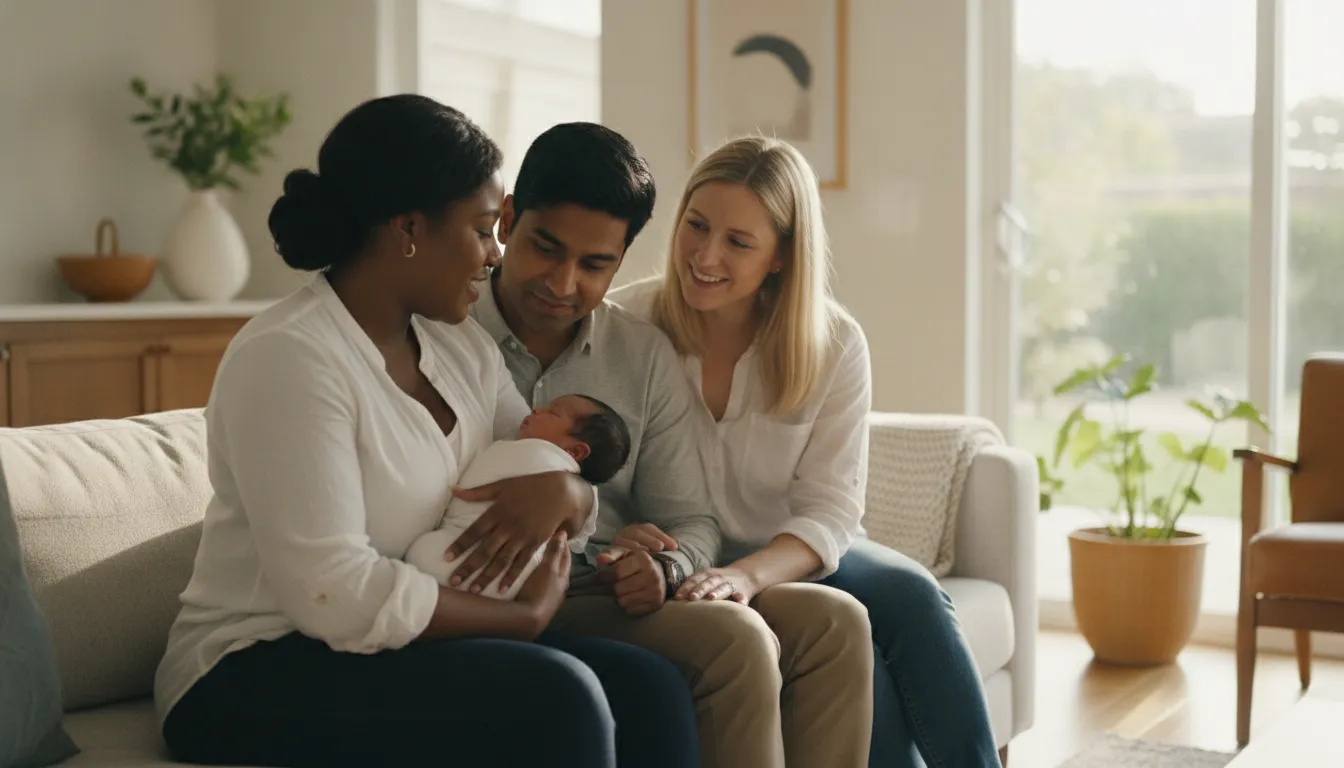
A doula silicon valley families can rely on provides non-medical emotional, physical, and informational support tailored to the realities of demanding schedules. That may include birth preparation, postpartum day or overnight care, newborn guidance, and a coordinated team approach that helps families feel supported without replacing their licensed healthcare providers.
Nurturing Hands Doulas serves families across the Bay Area, including the South Bay and Peninsula, with personalized matching and broad postpartum expertise. Explore Bay Area doula services as you consider what kind of continuity and practical help would fit your family.
What Can a Doula Offer Silicon Valley Families?
A doula offers Silicon Valley families non-medical emotional, physical, and informational support, with postpartum care that can ease the practical demands of recovery and newborn life. A team-based agency can also provide personalized matching, broad expertise, and support across the Bay Area, including the South Bay and Peninsula.
For expecting parents and new parents, a doula’s role is centered on steady, practical support rather than clinical treatment. Doulas do not diagnose, prescribe, perform clinical procedures, or replace licensed healthcare providers. They can offer reassurance, information, comfort measures, and hands-on help while families remain connected to their medical team.
It is also important to distinguish doulas from midwives. These are separate professional roles. Midwives are licensed medical practitioners who manage clinical care during pregnancy and birth. Doulas provide non-clinical emotional, physical, and informational support. Understanding that distinction helps families choose the right combination of professional care for their needs.
Postpartum support for recovery and newborn care
For many Silicon Valley households, the most valuable support begins after birth. Nurturing Hands Doulas offers postpartum day care, overnight care, and 24/7 care, along with newborn care, lactation education, childbirth education, and gentle pediatric sleep consulting. This range allows families to consider support that fits their recovery, newborn-care questions, and changing household routines.
Postpartum support can include practical family support during a demanding transition. Overnight care may include newborn support and protected rest for recovering parents. Daytime support can help families feel less alone while they establish routines and care for a new baby. These services are described in more detail through Silicon Valley postpartum doula support.
A coordinated team across the Bay Area
Families do not have to approach care as a solo-practitioner relationship. Nurturing Hands Doulas uses a team-based model, with personalized matching and broad expertise under one roof. That approach can be useful for families who value thoughtful coordination and want to understand how their support team is assembled.
The agency serves families throughout the San Francisco Bay Area. Its documented service area includes San Francisco, the East Bay, South Bay, North Bay, the Peninsula, and Marin County. Families exploring local options can review the agency’s Bay Area doula services to see how the broader service area relates to their location.
Whether your family is planning for recovery, newborn care, or a more supported transition at home, a conversation can clarify which type of non-medical help may fit. Consider requesting a consultation to discuss your priorities and explore a personalized support plan.
How Should Tech Professionals Evaluate a Doula Agency?
Tech professionals evaluating a doula agency should look beyond a single resume. Prioritize personal matching, a clear team structure, dependable backup coverage, documented credentials, and continuity across care. A discovery call can help you understand the agency’s model and ask practical availability questions. It can also help you decide whether the relationship feels like a good fit.
Start by asking how the agency builds its care team. Nurturing Hands Doulas uses a team-based model rather than an independent solo-practitioner model. That distinction matters for families balancing demanding work schedules, shared responsibilities, and the transition into parenthood. An agency model can bring broad expertise under one roof while reducing the need for parents to coordinate several independent providers themselves.
Next, ask how matching works. Nurturing Hands Doulas provides personalized matching, with the goal of connecting each family to doulas who fit its needs and preferences. Families can request a free discovery call, discuss their needs, and be matched with two to three doulas before choosing the best personal fit. This gives expecting parents space to consider communication style, experience, and the kind of support they want before making a decision.
Backup coverage is another important evaluation point, especially for birth support. Nurturing Hands Doulas provides birth clients with a primary doula and a backup doula, and both are introduced during pregnancy. Meeting both doulas supports continuity if the primary doula is unavailable. During a consultation, ask how introductions happen, how the team communicates, and what continuity looks like throughout the care relationship.
Review credentials and safety practices without treating credentials as the only measure of fit. Founder Carla Rocha has more than 15 years of experience. Team members are CPR-certified and undergo background checks. Ask who may be involved in your care, what experience is relevant to your goals. And how the agency’s broad expertise supports families across pregnancy, birth, or postpartum needs.
It is also reasonable to ask about location and scheduling. Service decisions can depend on the requested date, location, and a doula’s stated travel range, so discuss your address. Anticipated timing, and care needs directly rather than assuming a search result or general service area guarantees availability. Clear questions early can help you understand what the agency can offer without making assumptions.
Finally, confirm scope. Doulas provide non-medical emotional, physical, and informational support. They do not diagnose, prescribe, perform clinical procedures, or replace licensed healthcare providers. Midwives and doulas are distinct: midwives manage clinical care, while doulas provide non-clinical support. Learn more about the agency model on the Nurturing Hands Doulas team page, then bring your questions to a discovery call to explore whether the match feels right.
If you want help evaluating your options, a conversation with the agency can clarify matching, backup coverage, credentials, and continuity for your family.
Can Employer Benefits Help Cover Doula Support?
Employer benefits may offer more than one possible pathway for paying for doula support, including Carrot Fertility benefits and HSA or FSA funds. However, eligibility, covered categories, documentation, payment procedures, caps, and tax treatment can vary. Families should confirm the details with the employer, benefit administrator, or account administrator before making assumptions.
For employees at Bay Area technology companies and other employers, Carrot Fertility may be relevant when exploring whether a workplace benefit can help with family-building or related support. The important word is may. Carrot benefit terms differ by employer plan, so one family’s experience should not be treated as a guide to another family’s eligibility or available support.
Before selecting a doula or planning around a Carrot benefit, ask the employer or Carrot whether doula support falls within an eligible category under the specific plan. Confirm how the benefit works in practice. Some plans may use a particular payment process or require documentation, and the relevant requirements should come directly from the plan administrator or Carrot. Do not assume that a benefit exists simply because an employer offers Carrot.
HSA and FSA accounts may provide another possible payment pathway. HSA and FSA payment options may be accepted, but eligibility and tax treatment should be confirmed with the account administrator. The account administrator can clarify whether the intended expense is eligible, what records are needed, and how payment should be handled. Families should obtain that guidance before relying on account funds or treating a payment as eligible for a particular tax purpose.
A practical verification checklist can make the conversation more efficient:
- Ask the employer or Carrot whether the plan includes a category that could apply to doula support.
- Ask which services, if any, may qualify under the plan’s eligible categories.
- Confirm whether the plan has caps or other limits, and ask the administrator to explain them.
- Request the required documentation and clarify who must provide it.
- Confirm the payment process, including whether payment occurs directly or follows another plan procedure.
- For HSA or FSA funds, ask the account administrator to confirm eligibility and tax treatment.
- Keep the written guidance and any receipts or documentation requested by the relevant administrator.
This verification step helps families make an informed decision without assuming coverage, reimbursement, eligibility, savings, or a specific employer benefit. If you would like to talk through the type of doula support you are considering. A consultation with Nurturing Hands Doulas can help you identify the questions to bring to your benefit administrator.
What Does Flexible Postpartum Care Look Like for Dual-Income Families?
Flexible postpartum care gives dual-income families practical support that can fit changing work, recovery, and newborn needs. Families may schedule daytime, overnight, or 24/7 care, with overnight support available from one to seven nights each week. This can help protect rest while providing dependable newborn and household guidance.
For families balancing demanding schedules, postpartum support does not have to follow a single template. Nurturing Hands Doulas offers postpartum day care, overnight care, 24/7 care, and newborn care. That range allows expecting parents and new parents to think about the specific stretches of the day or night when another trained support professional would be most useful.
Daytime care can create space for recovery, newborn routines, and practical family support after birth. Postpartum day shifts have a four-hour minimum, so a family might use a shift as a focused block of help rather than trying to coordinate many short visits. The right focus can change from one day to the next. Support may center on newborn care, helping a recovering parent rest, or making the transition home feel more manageable.
Overnight care is another option for families who need protected rest while caring for a newborn. Overnight postpartum care can include newborn support and protected rest for recovering parents. Overnight shifts have an eight-hour minimum, creating a defined period in which a parent can sleep, recover, and begin the next day with more capacity. Families exploring this option can learn more about overnight postpartum doula care and consider how it fits their household rhythm.
Scheduling can also expand or contract as needs change. Postpartum care can be scheduled from one night to seven nights per week. A family might begin with one night weekly, choose more frequent support during an especially demanding period, or build a fuller schedule around recovery and newborn care. The key is to discuss the preferred rhythm, the kind of help needed, and the points in the week when protected rest would make the greatest difference.
Families can review the broader approach to postpartum doula support when planning care. Postpartum doulas provide non-medical support, not diagnosis, prescriptions, or clinical procedures. Their role is to support practical family needs, newborn care, and recovery while licensed healthcare providers manage medical concerns. Flexible care should complement, not replace, a family’s healthcare team.
If your schedule or recovery needs are difficult to predict, a consultation can help you explore a realistic combination of day, overnight, newborn, or 24/7 support. Connect with Nurturing Hands Doulas to discuss what type of postpartum care may fit your family.
Birth Doula or Postpartum Doula: Which Support Fits?
The right doula depends on when your family needs support. A birth doula focuses on emotional, physical, and informational support during labor, while a postpartum doula supports the family at home after birth. For many families, postpartum care offers practical help with recovery, newborn care, and protected rest.
Birth and postpartum doulas share the same non-medical scope, but their timing and day-to-day focus are different. A birth doula supports the birthing person and partner during labor, offering comfort measures, encouragement, information, and continuity as the birth unfolds. At Nurturing Hands Doulas, birth support is on call from 37 weeks through delivery. Birth clients receive a primary doula and a backup doula, and meet both during pregnancy so there is a continuity plan if the primary doula is unavailable.
A postpartum doula begins supporting the family after the baby is born, often at home. The focus can include postpartum recovery, newborn care, and practical family support. Overnight postpartum care may include newborn support and protected rest for recovering parents. Nurturing Hands Doulas offers postpartum day care, overnight care, and 24/7 care, allowing families to consider the type and rhythm of help that best fits their household.
| Support type | Primary timing | Typical focus |
|---|---|---|
| Birth doula | During labor, with on-call support from 37 weeks through delivery | Non-medical emotional, physical, and informational support for the birthing person and partner |
| Postpartum doula | At home after birth | Recovery support, newborn care, practical family help, and protected rest |
Families may choose one type of support or combine both, depending on their priorities. If the most pressing concern is preparation for labor and steady support during delivery, a birth doula may be the better fit. If the central need is rest, newborn care, or help adjusting after birth, postpartum support may be the more relevant starting point. Postpartum day shifts have a four-hour minimum, overnight shifts have an eight-hour minimum, and care can be scheduled from one night to seven nights per week.
It is also important to understand what doulas do not provide. Doulas do not diagnose, prescribe, perform clinical procedures, or replace licensed healthcare providers. Midwives and doulas are distinct roles: midwives manage clinical care during pregnancy and birth, while doulas provide non-clinical support. A doula can complement a family’s medical care without taking its place.
If you are deciding between birth and postpartum support, request a free discovery call to discuss your family’s priorities and identify the most appropriate type of care.
Questions to Ask Before Hiring a Silicon Valley Doula
Before hiring a Silicon Valley doula, ask how the team is structured, how matching works, and what backup looks like. Review credentials and confirm whether the doula can serve your location and dates. Ask how benefits questions are handled and what you can expect from an initial consultation.
An interview helps you compare care models without reducing the decision to one credential or conversation. Doulas provide non-medical emotional, physical, and informational support, so your questions should clarify how that support will fit your family alongside licensed healthcare providers.
- Is this a team-based agency or an independent solo practice? Ask who coordinates your care and whether the agency model provides access to a broader team. Nurturing Hands Doulas uses a team-based model rather than an independent solo-practitioner model, which may matter to families seeking continuity and dependable coordination.
- How will you match us with the right doula? Ask what the matching process considers, including your needs, communication preferences, and the type of support you want. The agency describes personalized matching and broad expertise under one roof, and families can discuss their needs before choosing a personal fit.
- Who is the backup, and will we meet that person? For birth support, ask whether you will have a named primary and backup doula and when you will meet both. Nurturing Hands Doulas states that birth clients receive a primary doula and a backup doula and meet both during pregnancy.
- What credentials, screening, and experience should we review? Ask about relevant experience, CPR certification, and background checks. Nurturing Hands Doulas reports that team members are CPR-certified and undergo background checks; founder Carla Rocha has more than 15 years of experience.
- Can you serve our dates, location, and travel needs? Share your address, expected timing, and preferred schedule, then ask how travel range and date-specific availability are assessed. Location, requested date, and a doula’s stated travel range can affect which support options are practical, so confirm these details directly.
- What should we verify about employer or account benefits? If you hope to use a fertility benefit or HSA or FSA funds. Ask what documentation and payment information you should confirm with your employer, benefit administrator, or account provider. Treat eligibility as a verification question, not an assumption.
- What happens during the consultation, and what decisions can we make afterward? Ask how the conversation works, what questions you can bring, and whether you can take time to compare options. Families can request a free discovery call, discuss their needs, and be matched with two or three doulas before choosing a personal fit.
Use your consultation to ask follow-up questions openly and decide whether the agency’s model feels right for your family. Request a free discovery call with Nurturing Hands Doulas to discuss your needs and explore a personal match.
Frequently Asked Questions
What does a doula do for a Silicon Valley family?
A doula provides non-medical emotional, physical, and informational support during pregnancy, birth, or the postpartum period. Depending on your plan, support may include newborn care, feeding education, recovery assistance, practical household guidance, and protected rest for parents.
Can employer benefits help pay for doula support?
They may. Carrot Fertility benefits can be relevant for some employees, but eligible services, caps, documentation, and payment procedures vary by employer plan. HSA or FSA payment may also be possible, so confirm eligibility and tax treatment with your plan administrator before booking care.
Does a doula replace a doctor or midwife?
No. Doulas offer non-clinical support and do not diagnose, prescribe, perform clinical procedures, or replace licensed healthcare providers. Midwives and other clinicians manage medical care, while a doula complements that care by supporting the family emotionally, physically, and informationally.
What can overnight postpartum doula care include?
Overnight support may include newborn care, help with feeding routines, and protected rest while a parent recovers. Nurturing Hands Doulas documents an eight-hour minimum for overnight shifts, with care schedulable from one night to seven nights per week: learn more about overnight postpartum support.
How do I start choosing a doula?
Begin with a discovery call to discuss your schedule, support needs, location, and preferred type of care. Nurturing Hands Doulas can discuss your needs and match you with two to three doulas before you choose the personal fit that feels right: request a free discovery call.
Find the Right Doula Support for Your Family
Choosing support for pregnancy, birth, and the early postpartum weeks is a personal decision, especially when work demands and family responsibilities are already full. A thoughtful conversation can help you identify the kind of non-medical support that fits your recovery, newborn care, feeding, rest, and scheduling needs. Nurturing Hands Doulas offers a team-based approach for Bay Area families, with personalized matching and practical guidance for both expecting and new parents. The focus is postpartum-first, so you can explore day care, overnight support, newborn assistance, and other services without having to coordinate everything alone.
If you are exploring doula support in Silicon Valley, request a free discovery call to share what your family needs and learn which options may be a good fit. The call is a comfortable place to ask questions, discuss priorities, and decide at your own pace.