
Families searching for doula San Jose South Bay support can find compassionate, non-medical care for birth preparation, labor, postpartum recovery, newborn care, and overnight help. Nurturing Hands Doulas brings a team-based model to San Jose, Santa Clara, and nearby South Bay communities, with personalized matching, broad expertise, and dependable backup coverage.
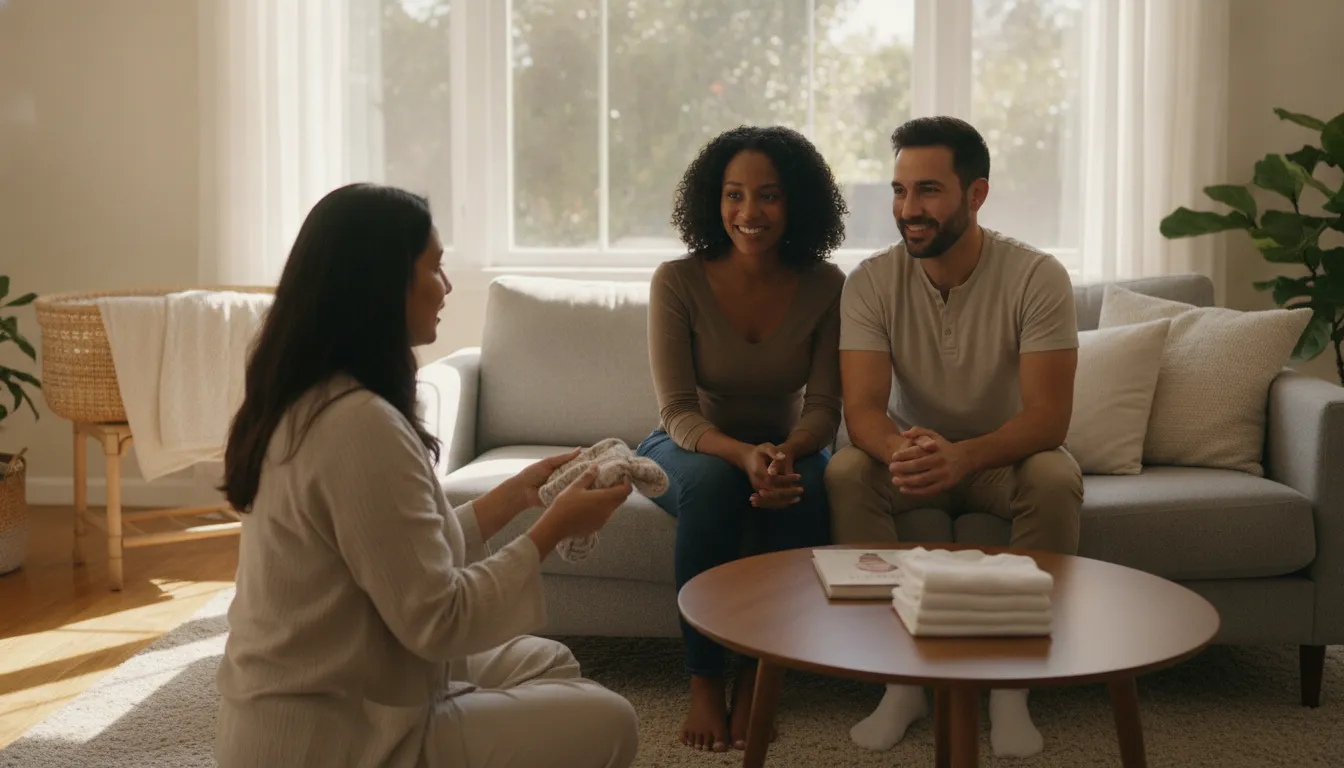
The right support plan can look different for every family. Some parents want guidance during pregnancy and labor, while others mainly need rest, feeding support, practical newborn care, or help recovering at home. This South Bay guide adds local detail to the broader Bay Area doula services guide, explaining how an agency model works and how to plan support around work, benefits, and your chosen birth setting.
Birth and postpartum doula services in San Jose and Santa Clara
South Bay doula services can support families before, during, and after birth, but birth and postpartum care serve different needs. Birth support centers on preparation, comfort, and continuous non-medical labor support. Postpartum support focuses on recovery, newborn care, feeding education, rest, and the day-to-day transition home.
Nurturing Hands Doulas supports families throughout the San Francisco Bay Area, including the South Bay. A consultation is the best way to discuss your neighborhood, due date, care preferences, and the type of support that would be most useful. Families can learn more about Bay Area doula services while using this article for South Bay-specific planning.
Birth doula support from pregnancy through delivery
Birth doula support is available on call from 37 weeks of pregnancy until delivery. Before labor, a doula can help you prepare questions, talk through comfort preferences, consider partner support, and create a birth wish list that reflects your priorities. During labor, non-medical support may include breathing guidance, position changes, light touch massage, emotional reassurance, informational support, and help communicating questions to the clinical team.
Doulas do not diagnose, prescribe, perform clinical procedures, or replace licensed healthcare providers. Your physician, midwife, or hospital team remains responsible for medical care and clinical decisions. A doula adds continuous emotional, physical, and informational support while respecting the family’s choices.
For families considering labor support, the agency model can offer an additional layer of reliability. Each birth family receives a primary doula and a backup doula, and both are introduced during pregnancy. You can review the difference between care options in the guide to birth doula and postpartum doula support.
If you are weighing birth support in San Jose or Santa Clara, a consultation can help you decide what belongs in your plan and what questions to ask your healthcare team.
Postpartum support after you return home
Postpartum doula care is designed around the family’s actual home routine. Support may include newborn soothing, diapering, feeding education, bottle-feeding guidance, breastfeeding support, baby-wearing education, light household help, meal preparation, and time for a recovering parent to rest. A doula can also offer non-judgmental information as parents build confidence and learn their baby’s cues.
Day shifts have a four-hour minimum, while overnight shifts have an eight-hour minimum. Families may schedule postpartum care from one to seven nights per week, depending on their needs and availability. The postpartum doula services page provides a broader view of what this support can include.
Postpartum doulas are not medical providers. Contact your obstetric, pediatric, or mental health clinician for diagnosis, treatment, urgent concerns, or any question about a medical condition. Doula support complements clinical care by making the practical and emotional parts of early parenthood more manageable.
South Bay families can use a free discovery call to discuss recovery expectations, newborn care needs, feeding goals, and the type of schedule that would feel sustainable at home.
South Bay hospitals and birth settings to discuss with your doula
A doula can support a family’s preparation for a hospital birth, birth center experience, or planned home birth without replacing the clinical team at that setting. Because each facility has its own policies and each family’s care plan is different, South Bay parents should discuss the chosen location, visitor rules, admission process, and doula access during their consultation and prenatal appointments.
San Jose and Santa Clara families may be planning care through a hospital system, a birth center, or a home birth provider. Rather than assuming that every setting follows the same rules, ask your chosen clinician or facility:
- When should we call the clinical team and when should we contact our doula?
- Where can a doula be present during triage, labor, birth, and immediate postpartum recovery?
- What are the current visitor and support-person policies?
- How can our doula support the partner while the clinical team manages medical care?
- What should we pack and what comfort tools are permitted?
A birth doula can help you prepare questions and comfort preferences, but the hospital or birth center determines its own policies. The doula also does not speak for the clinical team or make decisions about induction, medication, surgery, monitoring, or discharge.
Families can also plan support for the transition from their birth setting to home. A postpartum doula may help organize the first days, prepare a feeding and changing area, support basic newborn routines, and make it easier for a recovering parent to rest. See the guide to what a postpartum doula does for a practical overview.
If you already know your preferred South Bay birth setting, bring that information to your consultation so the agency can discuss fit, timing, and the support model that applies.
Overnight newborn care for Silicon Valley families
Overnight postpartum support can give South Bay parents knowledgeable help during the hours when feeding, soothing, diapering, and settling often repeat. A trained doula can care for the newborn between feeds, share practical education, and protect a parent’s opportunity to sleep, while following the family’s preferences and safe-sleep guidance from their healthcare team.
Overnight care is often relevant for dual-income households, technology employees, families returning to demanding work, parents recovering from birth, and families without nearby relatives. The goal is not to impose one routine. It is to provide responsive, respectful support while parents learn what works for their baby.
Depending on the plan, an overnight doula may help with:
- Newborn soothing, diapering, and settling
- Breastfeeding, pumping, or bottle-feeding education
- Burping and basic post-feed care
- Preparation of feeding and changing supplies
- Practical guidance about normal newborn behavior
- Light household tasks that make the next day easier
Families should follow their pediatrician’s instructions for safe sleep, feeding, medication, and warning signs. A doula can share education and observations, but cannot diagnose an infant or provide medical treatment. Nurturing Hands Doulas also offers a dedicated resource on night postpartum support and an article about overnight doula help with newborn sleep.
Discuss your expected due date, newborn-care preferences, feeding plan, and ideal number of nights during the consultation. Earlier planning may make it easier to build a schedule, although the agency can discuss availability for families reaching out later.
How employer benefits can help South Bay families plan doula care
Employer-sponsored benefits may help eligible South Bay families budget for doula support, but coverage depends on the employer plan, benefit administrator, and service requirements. Nurturing Hands Doulas accepts Carrot Fertility benefits and HSA/FSA payments when applicable. Families should confirm eligibility, documentation, reimbursement rules, and deadlines before assuming a service will be covered.
Carrot is especially relevant for Silicon Valley employees whose benefits include fertility, pregnancy, postpartum, or family-building support. Before scheduling, review your benefit portal or contact the administrator to ask:
- Does the benefit include birth doula, postpartum doula, or overnight newborn support?
- Must the provider be listed in a specific directory or network?
- Is preauthorization required before services begin?
- What receipts, invoices, or provider credentials are required?
- Does the benefit have a plan-year deadline or remaining balance?
HSA and FSA rules can also vary by plan and individual circumstances. A payment method being accepted does not guarantee reimbursement or eligibility. Keep copies of invoices and ask the plan administrator about the documentation it requires. The Carrot Fertility doula services guide offers additional questions to consider.
Benefit questions are a helpful part of the consultation, but the agency cannot guarantee a plan’s approval, reimbursement, savings, or remaining balance. A family can ask for an explanation of the service and payment process, then verify the final decision with its own benefit administrator.
If you are comparing options through an employer benefit, a consultation can help connect your support goals with the type of care you want to ask your plan about.
How to choose a South Bay doula team
The best South Bay doula match combines service fit, communication style, availability, scope clarity, and confidence in the backup plan. Ask how the agency matches families, who provides coverage, what training the team maintains, and how birth and postpartum services differ. A thoughtful consultation should leave you informed, not pressured.
Useful questions include:
- What experience does the team have with birth, postpartum, and newborn care?
- How are families matched with a doula?
- Will we meet a backup doula before birth?
- What does day, overnight, or 24/7 support look like?
- How does the doula work alongside our partner and licensed healthcare providers?
- What are the minimum shift lengths and scheduling expectations?
- How does the agency handle a change in due date or an unexpected availability issue?
Nurturing Hands Doulas emphasizes personalized matching, team-based care, certified doulas, CPR certification, background checks, and broad expertise under one roof. Founder Carla Rocha brings more than 15 years of experience and specialized certifications in birth doula care, postpartum doula care, newborn care, pediatric sleep consulting, lactation education, and childbirth education.
Families can also review how backup doula coverage works before deciding whether an agency model fits their needs. Choosing support is personal, so it is reasonable to ask for clear answers about boundaries, scheduling, communication, and who will be present.
When you are ready to compare support options, a conversation with the agency can help you identify the questions that matter most for your family.
Schedule a South Bay Doula Consultation
South Bay doula services FAQ
South Bay families often want practical answers about location, timing, scope, overnight care, and benefits before choosing a doula. These answers summarize the most important planning points: doulas provide non-medical support, postpartum care can be scheduled flexibly, and a consultation is the right place to confirm fit and availability for your family.
Does Nurturing Hands Doulas serve San Jose and Santa Clara?
Nurturing Hands Doulas serves families across the San Francisco Bay Area, including the South Bay. San Jose and Santa Clara families can use a consultation to discuss their address, due date, desired service, birth setting, schedule, and current availability.
What is the difference between a birth doula and a postpartum doula?
A birth doula provides non-medical preparation, emotional support, comfort measures, and informational support during labor and delivery. A postpartum doula supports recovery, newborn care, feeding education, rest, and the transition home after birth. They are distinct roles and are not the same as midwives or other licensed medical providers.
How early should South Bay families book postpartum support?
Many families begin planning postpartum support two to three months before the due date so they have time to discuss needs, explore schedules, and complete matching. Last-minute requests may be considered based on availability. Contact the agency with your due date and preferred schedule for the most useful answer.
Can an overnight doula care for my newborn while I sleep?
An overnight doula can provide non-medical newborn care and practical support during an overnight shift, following the family’s preferences and safe-sleep guidance. Parents remain responsible for medical decisions, and a doula does not diagnose illness or replace pediatric care. Discuss feeding, settling, and sleep expectations during the consultation.
Will Carrot or an HSA/FSA pay for doula services?
It depends on the specific employer or account rules. Nurturing Hands Doulas accepts Carrot Fertility benefits and HSA/FSA payments when applicable, but acceptance does not guarantee eligibility or reimbursement. Confirm covered services, authorization, documentation, and deadlines with your plan administrator.
Book a consultation for South Bay doula support
South Bay doula support can be tailored to the season your family is entering, whether you are preparing for birth, planning overnight newborn care, recovering postpartum, or using an employer benefit. Nurturing Hands Doulas can help you compare service options, understand the agency model, and identify a support plan that respects your choices.
For families in San Jose, Santa Clara, and nearby South Bay communities, the next step is to gather your due date, preferred birth setting, support goals, and benefit questions. A free discovery call creates space to discuss your needs and learn whether Nurturing Hands Doulas is a good fit. The Bay Area pillar guide remains available for families comparing support across additional regions.